
Making Space for Curious Minds: What We're Building at The Lighthouse Project, Middleton
There's something quietly radical about a community space that simply refuses to give up on people.
The Lighthouse Project in Middleton has been doing exactly that for years — a genuine, grassroots community hub that serves some of the most underserved people in the borough. Food, warmth, connection, support: the Lighthouse does the unglamorous, essential work that holds communities together when everything else pulls them apart. It's the kind of place that doesn't make headlines as often as it should, and it's the kind of place that No Worries IT Ltd is proud to call a partner.
We've been running digital skills sessions at the Lighthouse for a while now, and what happens in that room on a Thursday afternoon is, frankly, one of the best things we do.
The MidiDigi Geeks Retreat: Show Up. Dig In. See What Happens.
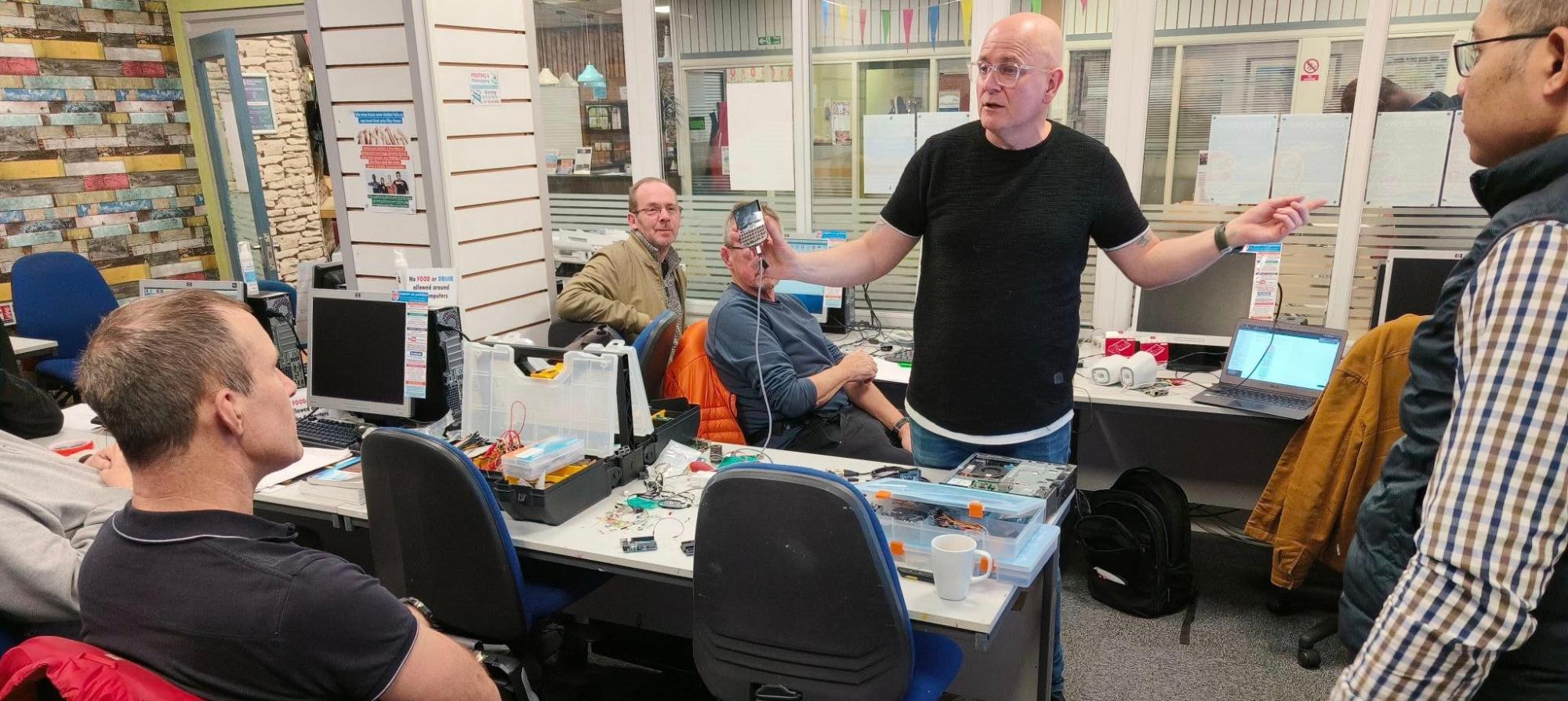
Every Thursday afternoon, the Lighthouse Project hosts our MidiDigi Geeks Retreat — a drop-in session that deliberately refuses to be a course.
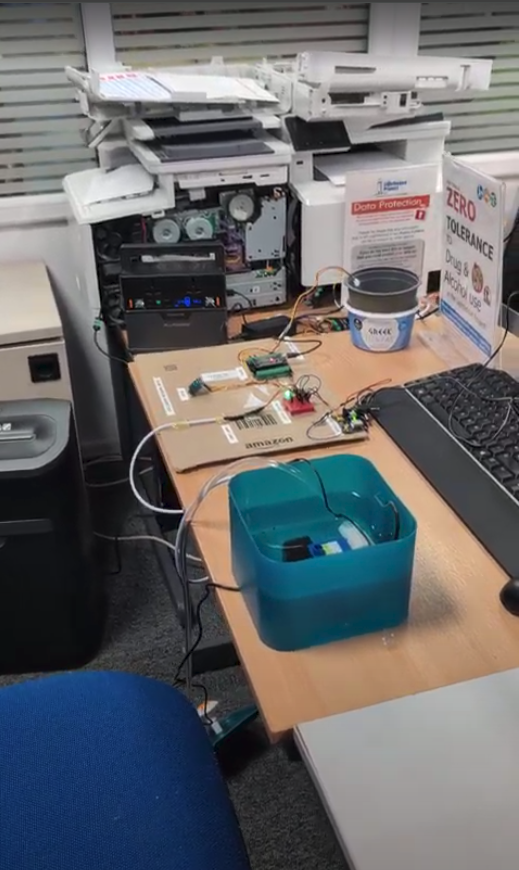
There's no syllabus. No assessment. No expectation that you'll arrive knowing anything, or leave having achieved a defined outcome. What there is, is a table covered in Raspberry Pis, Arduinos, ESP32 boards, sensors, breadboards, LED strips, and whatever else we've thrown into the kit bag that week — and a room full of people at completely different stages of their own journeys, all doing something with their hands and their curiosity.
This is the Heritage Hackers format, delivered by No Worries IT Ltd under the MidiDigi brand, and it's rooted in a Freirean approach to learning: knowledge isn't poured into passive recipients — it's built through dialogue, through doing, through the generative friction of people working things out together. The educator's job isn't to have all the answers. It's to create the conditions in which questions become productive.
In practice, that looks like a room where a retired factory worker might be debugging C++ next to a teenager soldering their first circuit, while someone else asks why their sensor readings keep jumping around, and the conversation that emerges from that question turns out to be the most useful twenty minutes anyone in the room has had all week. Nobody planned it. That's the point.
We bring the kit. We bring the curiosity. You bring yourself.
What Happens When You Get Out of the Way
If you want to know what this approach actually produces, read the story of Paul Owen.
Paul spent the best part of his working life at Ferranti — one of the great names in British electronics — soldering, testing, building. Then came the redundancies, the long slow unravelling of British manufacturing, and years of distance from the industry he'd helped build. By the time he found his way to a MidiDigi session at the Lighthouse, his confidence had taken the kind of battering that doesn't show up on a CV.
He mostly watched for the first few sessions. Asked a few careful questions. Then something clicked.
Within weeks he was writing and modifying C++ from scratch, debugging with the calm instinct of someone who'd spent decades solving problems with his hands — because it turned out the fundamentals he'd learned at Ferranti hadn't gone anywhere. Voltage, current, logic. The tools are different. The thinking is the same. His first published project on the Arduino Project Hub — a fully functional home alarm system — has now been viewed over 51,000 times by makers around the world.
But here's the part we're most proud of: Paul has formed his own maker group, meeting independently at the Lighthouse between our sessions. Self-organising, grassroots, community-led making. That's what happens when you create the right conditions and then get out of the way.
You can read Paul's full story here: From the Factory Floor to the Maker Bench: Paul Owen's Journey Back Into Tech
The Lighthouse Project: Why the Space Matters
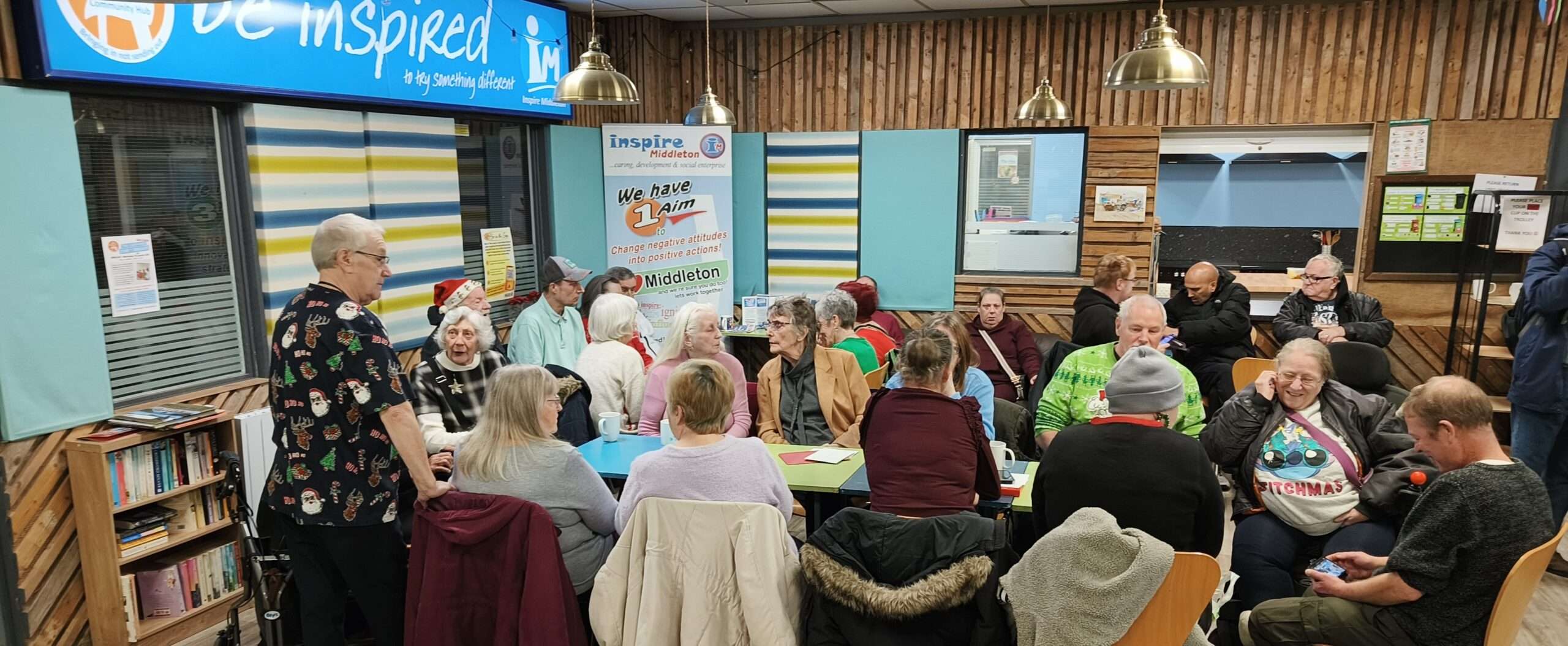
I've worked in a lot of community spaces over the years. Some of them — and I say this with genuine affection for the people trying their best within them — feel more like a secure unit than a community hub. Institutional furniture, strip lighting, a faint sense that you're there on somebody else's terms. The physical environment communicates something, whether it means to or not.
The Lighthouse Project is not that.
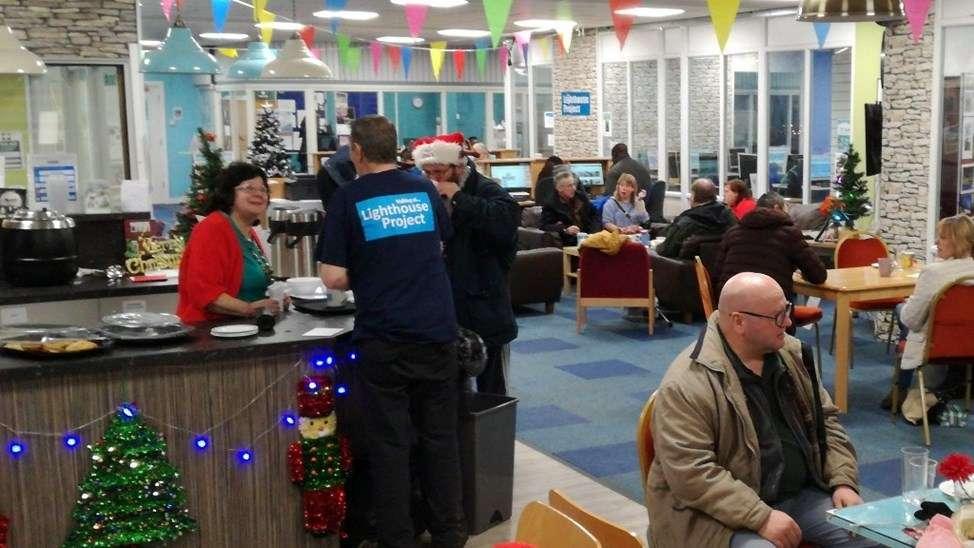
Tucked into the second floor of Middleton Shopping Centre, The Lighthouse Project is one of the busiest, warmest, most genuinely alive community spaces I've come across — and I don't say that lightly. On any given day there's an art group, a camera club, veterans dropping in, a knit and natter session, walking groups, money advice, a foodbank, a pantry where members pay a few quid and take home food worth many times that, and somewhere in the middle of all of it, a room full of people making things with microcontrollers on a Thursday afternoon.
The Lighthouse typically supports between 33,000 and 35,000 visits per year — and it does all of that as part of Inspire Middleton, a locally self-funded charity, not reliant on government or council funding, which means every penny has to be raised independently. That's around £350,000 a year through grants and donations just to keep the lights on and the doors open. If you've ever benefited from a session at the Lighthouse, or know someone who has, that context matters.
Their aim is simple: "welcome and support, so YOU achieve." What makes it work is that those aren't words on a wall — they're the operating culture of the place. The Lighthouse doesn't make people feel like a problem to be managed. It makes them feel like the point.
That's exactly the kind of space where our approach to digital education can do what it's supposed to do. You can't create the conditions for genuine curiosity-led learning in a room that already feels like a test. The Lighthouse removes that barrier before anyone walks through the door.
If you'd like to support the Lighthouse Project or find out more about their work, visit lighthouseproject.org.uk — or better still, call in. They're open Monday to Friday, 9:30am to 4:30pm.