
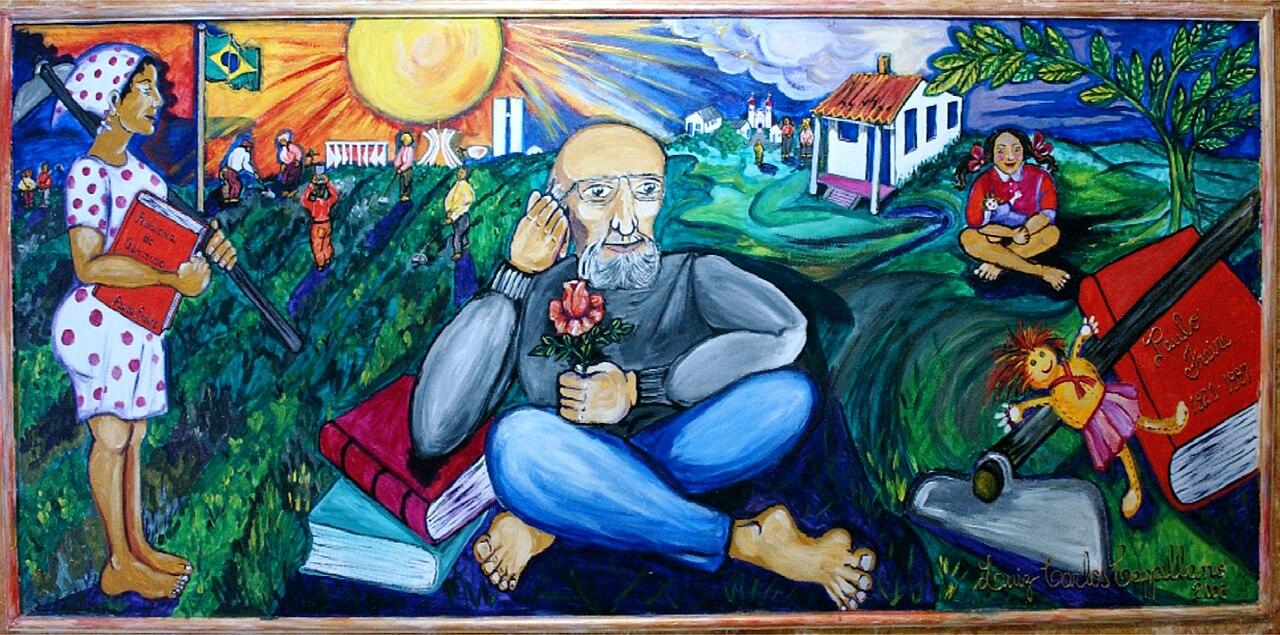
Why I Refuse to Teach You Anything!
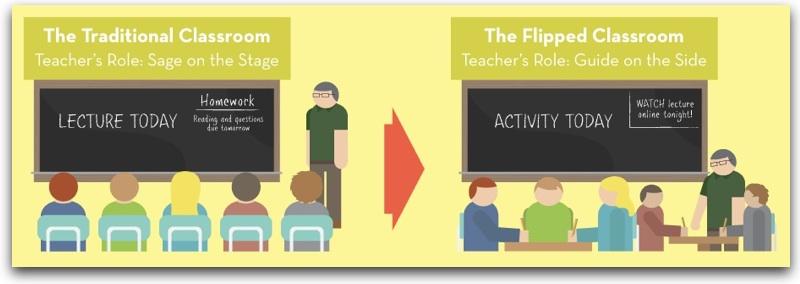
Who Was Paulo Freire?
Paulo Freire (1921–1997) was a Brazilian educator and philosopher whose landmark 1968 work, Pedagogy of the Oppressed, remains one of the most cited educational texts in history. Working with illiterate peasants in northeast Brazil, Freire developed a devastating critique of conventional education — and a radical alternative to it.
His core argument: most education, as traditionally practised, doesn't liberate people. It controls them.
He called this the banking concept of education.
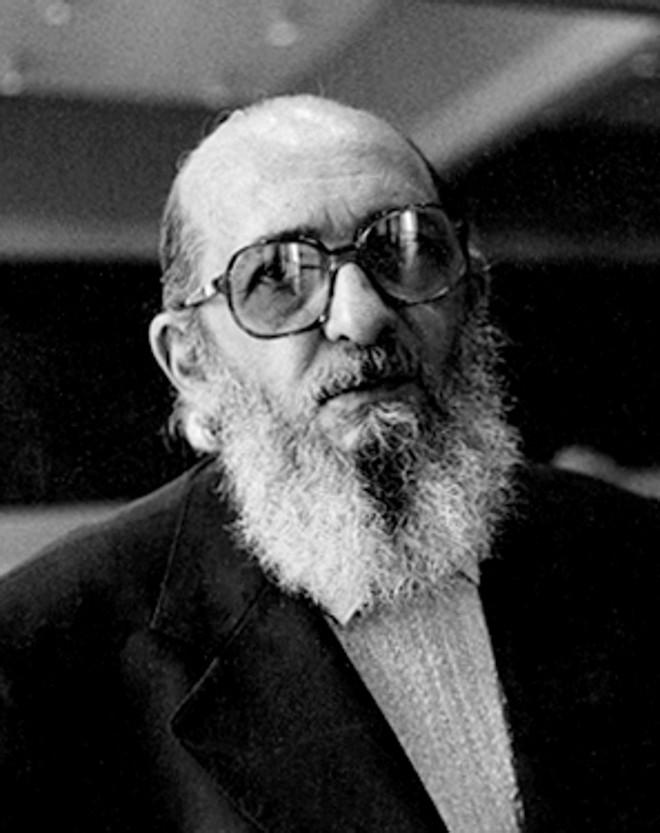

The Banking Concept: Ten Ways Education Gets It Wrong.
Freire identified ten defining characteristics of banking education — ten ways in which the traditional teacher-student relationship mirrors the relationship between the powerful and the powerless.
Read them, and ask yourself how many classrooms — or IT training sessions — you've sat in that fit the description.
1. The teacher teaches, and the students are taught. Knowledge flows one way. The teacher is the source; the learner is the destination. There is no dialogue, only transmission.
2. The teacher knows everything, and the students know nothing. The learner arrives as an empty vessel. Whatever experience, knowledge, or wisdom they bring through the door is irrelevant — or worse, an obstacle to be overcome.
3. The teacher thinks, and the students are thought about. The curriculum, the pace, the method — these are decisions made about the learner, not with them. The learner is an object to be acted upon.
4. The teacher talks, and the students listen — meekly. The dominant mode is the lecture. The learner's role is passive reception. Asking questions can feel like an admission of failure, or an inconvenience.
5. The teacher disciplines, and the students are disciplined. Authority is enforced, not earned. The power relationship is not questioned; it is simply the natural order of things.
6. The teacher chooses and enforces their choice, and the students comply. There is no negotiation about what is relevant, what is useful, or what the learner actually needs. The teacher decides; the learner accepts.
7. The teacher acts, and the students have the illusion of acting through the teacher's action. The learner might follow along, copy a demonstration, tick a box — but real agency remains with the teacher. Participation is performed rather than genuine.
8. The teacher chooses the programme content, and the students — who were not consulted — adapt to it. The curriculum exists before the learner arrives, and it will exist after they leave. The learner must fit the course; the course need not fit the learner.
9. The teacher confuses the authority of knowledge with professional authority, and sets both in opposition to the freedom of the learner. Expertise becomes a power tool. "I know, therefore I am in charge" — and questioning that authority becomes, implicitly, an act of defiance.
10. The teacher is the Subject of the learning process; the learner is merely an object. The teacher is the active agent — doing, deciding, directing. The learner is passive — receiving, complying, reproducing.
Freire's point is not that teachers are villains. It's that a system built on these assumptions produces dependency, not capability — and that dependency serves those who benefit from other people not fully understanding the world or their own power to act within it.
In short: banking education doesn't just fail learners. It diminishes them.
The Alternative: Critical Pedagogy
Against the banking model, Freire proposed what he called problem-posing education — a dialogical, critical approach in which:- The teacher and learner are both knowers and both learners
- Experience is the starting point, not an inconvenience
- Questions are more valuable than answers
- The goal is conscientização — critical consciousness, the capacity to reflect on and act in the world
This approach, and the broader field it inspired — critical pedagogy — insists that education is never neutral. It either reinforces existing power structures or challenges them. It either produces people who can think and act for themselves, or people who can follow instructions.
When we talk about this in the context of adult learning, we often use the term andragogy — the theory and practice of adult education. Malcolm Knowles, who developed andragogy as a framework in the 1970s, argued that adult learners are self-directed, bring significant prior experience, are motivated by real-world relevance, and learn best when they understand why something matters. Sound familiar? It should — it's Freire with the politics turned down and the practicality turned up.
So What Does This Have to Do with Arduino and IT Support?
When someone comes to one of my electronics or coding workshops — whether they're a teenager picking up a soldering iron for the first time or an adult who's never touched a microcontroller — I'm not there to download information into them. I'm there to help them discover what they're already capable of.
Take Arduino. I could stand at the front and explain how a PWM signal works, draw diagrams, test people on it afterwards. Banking model, start to finish. Instead, we start by doing — connecting an LED, making it blink, making it fade. The question why does that work? emerges naturally from the experience of it working. The theory follows the curiosity, not the other way round.
Every person in that room brings something. A background in music helps with thinking about timing and frequency, or composing with Sonic-Pi. Experience with car electrics is surprisingly useful for understanding circuits. A questioning mind that won't accept "just because" as an answer is the most valuable thing of all. None of that gets dismissed. It gets used.
The same goes for one-to-one IT support and mentoring. I'm not fixing your problem and handing it back to you — that's banking model IT support, and it keeps you dependent on me. I'm working through it with you, explaining as we go, making sure you understand what happened and why. The goal is that next time, you need me less. That's what success looks like.
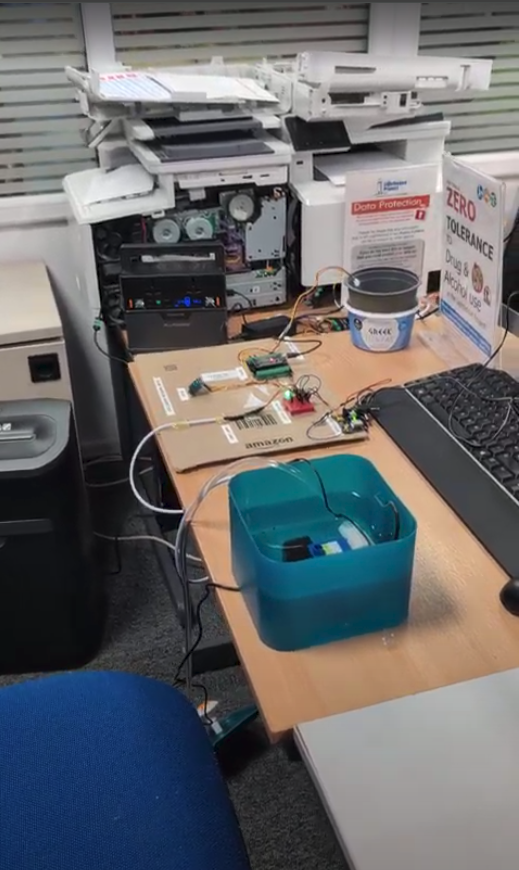
No Worries IT: Freirean in Practice
To put it plainly: No Worries IT is built on a rejection of the banking model.
- I don't assume you know nothing. You know things I don't. Our sessions are richer for that.
- I don't own the curriculum. What we cover emerges from what you need and what you're curious about.
- I don't perform expertise as authority. I share knowledge as a fellow learner who happens to have more experience in this particular area — for now.
- I don't aim to create dependency. Every session is, in a small way, working towards making itself unnecessary.
- I do believe that understanding technology — really understanding it, not just being able to follow instructions — is a form of power. And I think that power should be as widely distributed as possible.
That last point is worth sitting with. In a world increasingly shaped by technology, the people who understand how it works have a qualitatively different relationship to it than those who don't. Digital literacy is not just a job skill. It's a form of agency.
Freire talked about naming the world as the first act of liberation. Today, being able to name — and question, and modify, and build — the digital world you inhabit is part of that same project.
A Note to Funders and Partners
If you commission training or support through No Worries IT Ltd, this is what you're investing in: not a service that delivers content at passive recipients, but a genuinely dialogical learning experience designed to build real capability and confidence.
The evidence base for this approach is substantial — from Freire's original work to decades of research in adult learning and community education. Learners who are treated as active agents, whose experience is valued, and who understand the why behind what they're learning retain more, apply more, and develop more genuine independence.
That's good for your learners. It's good for your organisation. And frankly, it's a better use of everyone's time.
Final Thoughts
Freire once wrote that the teacher-student relationship is fundamentally narrative in character — the teacher narrates, and the learners receive, memorise, repeat.
I'd rather have a conversation.
If that sounds like the kind of learning environment you're looking for — whether you're an individual wanting to get to grips with electronics and coding, or an organisation looking for IT support and training that actually builds capacity — get in touch.
No deposits. No withdrawals. Just learning.
No Worries IT Ltd is a freelance IT and training service based in Rochdale, Greater Manchester, providing electronics and coding workshops, IT support, and digital skills development for individuals, community organisations, and small businesses.