
OggCamp 2026 — A Pilgrim Returns to Manchester
There are conferences, and then there is OggCamp. I've been to a few in my time — I cut my conference teeth at PHPNW right here in The Pendulum Hotel, Manchester around 2009 to 2011 — but OggCamp occupies a different category entirely. It's the one I come home from feeling simultaneously humbled, energised, and dangerously close to buying more Raspberry Pis.
Manchester 2026 was my third visit. I was at OggCamp Liverpool around 2012, and Sheffield in 2019. Each time, I've come away with the same feeling: that I've spent a weekend in the company of some of the most interesting, skilled, and genuinely generous people in the open source world. This year was no different. If anything, it was the best yet.
The Venue — Old Friends in New Configurations
The Pendulum Hotel on Sackville Street felt immediately familiar. It was the home of PHPNW back in the day, and it still carries that distinct atmosphere that is part conference hotel, part university building — because that's essentially what it is. Before the 2004 merger with the University of Manchester, this was UMIST territory. The hotel takes its name from a Foucault's pendulum that still hangs in the building — the kind of giant swinging demonstration of the Earth's rotation that you'd expect from a science and technology institution.
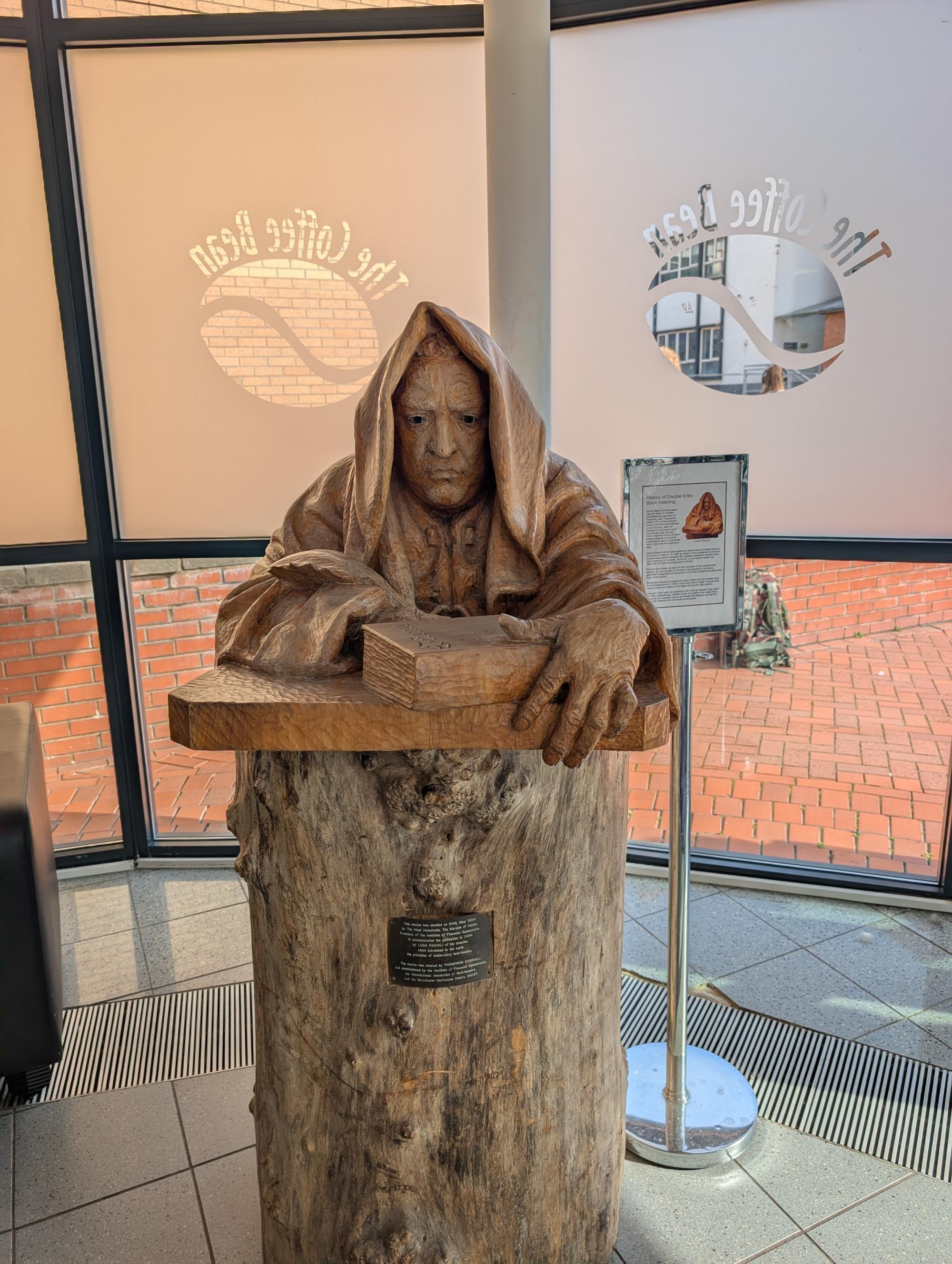
Watching over the entrance is a rather magnificent wooden sculpture that stopped me in my tracks. A hooded figure, intense of expression, leaning over a book with the focused energy of someone who absolutely does not want to be interrupted. He looks uncannily like Emperor Palpatine having a quiet read. He is, in fact, Luca Pacioli — a fifteenth century Italian friar and mathematician who essentially invented double-entry bookkeeping, publishing his landmark work Summa de arithmetica in 1494. He is considered the father of accounting, which makes him simultaneously one of the most consequential and least rock-and-roll figures in the history of mathematics. He fits the venue perfectly. He would probably have had opinions about open standards.
What Is OggCamp, and Why Does It Matter?
OggCamp is an unconference — or un-con, in the vernacular — which means it operates quite differently from your average tech event. Yes, there is a main stage track with scheduled talks. But alongside it run two unconference rooms where sessions are proposed, voted on, and organised on the day by the attendees themselves. The schedule emerges organically from the community rather than being handed down from on high by a programme committee. It sounds chaotic. In practice it produces some of the most interesting and relevant conversations you'll find anywhere.
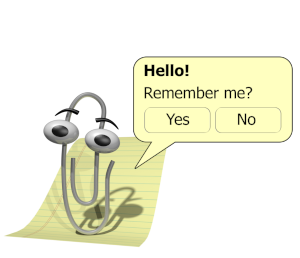
The sponsor and keynote partner this year was Collabora, the open source consultancy behind Collabora Online — the LibreOffice-based document suite that powers open source productivity for organisations worldwide. Their headline talk was titled Clippy's Funeral: Why Your Documents Deserve Better, which should give you a sense of the tone. They are fighting hard for open document standards, and winning. One line from the keynote has lodged itself firmly in my brain: you wouldn't want to buy a car with the bonnet welded shut. It's the kind of analogy that cuts through immediately. Nobody would accept not being able to look at, repair, or modify their own car. Why do we accept it from software?
There was also a line about Microsoft Office compatibility that deserves to be repeated at every opportunity: not even Microsoft Office products are fully compatible with other Microsoft Office products. The case for open standards practically makes itself.
But I want to say something about OggCamp before we get into the sessions, because the event itself is worth describing. I'll be honest — in most rooms I walk into professionally, I'm usually among the more broadly read and polymathic people present. I don't say that to be arrogant; it's just the reality of working across digital skills, community development, open source advocacy, web development, networking, and education all at once. At OggCamp, I am comfortably in the lower echelons of the polymath rankings. These are exceptional people. And yet there is no hierarchy, no gatekeeping, no sense that you need to prove your credentials. Everyone is a peer. That combination — intellectual humility and genuine community — is rare, and it's the reason I loved coming back.
Saturday — From Clippy's Funeral to the MOO
After the Collabora keynote, I made my way to a talk on smart home automation, and it landed somewhere quite personal. I've dabbled with home automation for years — I've used platforms like Home Assistant and had a play with various Raspberry Pi home automation distributions — but it took on a different dimension a few years ago when I started using it to help care for my elderly father. The speaker made a compelling case for Matter as the emerging standard that's finally cutting through the fragmentation, and advocated strongly for radio-based protocols over WiFi for reliability and resilience. By the end of the week, I had a new home automation Pi running in my house. Watch this space for a possible installation at the Lighthouse Project in Middleton too.
Jon (The Nice Guy) Spriggs' talk No Connection, No Chance — about helping the one in ten people who are digitally excluded — is the kind of session where I go in as an audience member and end up in conversation with the speaker as a peer. Fifteen years of working on digital inclusion in Greater Manchester gives you a few things to say. Jon's framing was excellent and the conversation that followed between us was exactly what the hallway track at OggCamp is for.
Then came what was, for me, the talk of the weekend on the Saturday. Martin Hamilton's Slime, Slop and Sabotage was a full 55-minute excavation of the generative AI landscape — specifically the deliberate weaponisation of AI-generated content to flood the information space, and the resulting epistemic crisis where nobody can be entirely sure what is real anymore. Martin is one of those speakers who radiates what I can only describe as positive geeky wizard energy. He is brilliant, funny, and deeply serious about ideas all at the same time. You can find him at martinh.net.
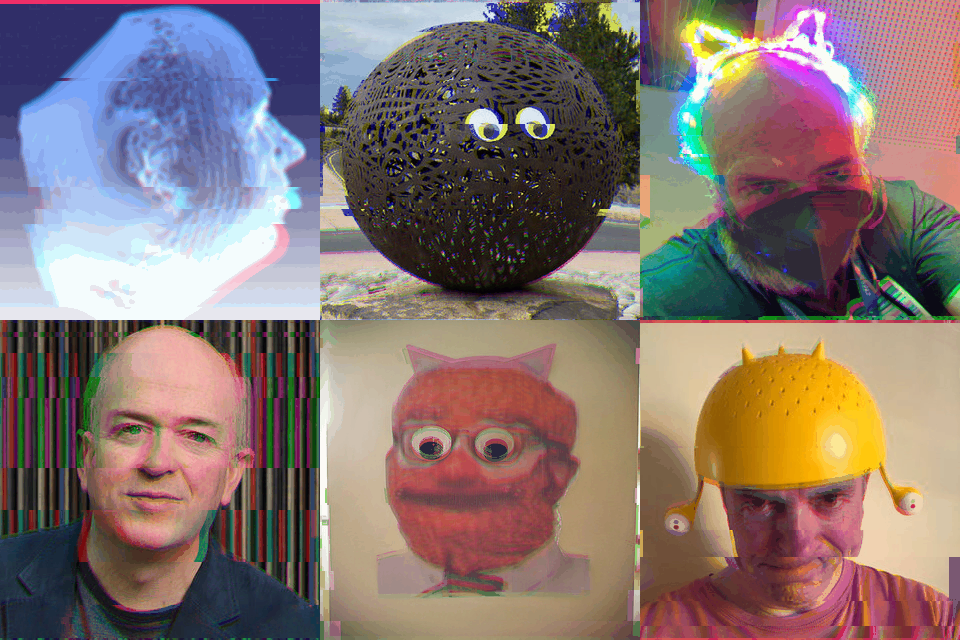
I should acknowledge the obvious irony here. I use AI as an intellectual sounding board — it's one of the most effective cures I've found for the particular kind of intellectual loneliness that comes from working across too many domains at once. I find the conversation genuinely valuable. But Martin's talk is a necessary corrective and a reminder that the same technology I find useful for thinking is simultaneously being industrialised into a slop machine for attention farming and information warfare. Both things are true. That tension is worth sitting with.
Battling Obsolescence — keeping an 80s laser tag system alive was always going to resonate with someone who runs laptop repurposing programmes and believes firmly that working hardware shouldn't become landfill because a corporation has decided its support window has closed. Magnificent stubbornness in talk form.
The Amateur Radio session was absolutely rammed — standing room only, which tells you something about the resurgent interest in the hobby. The talk itself leaned into radio design and exam preparation, but I managed to instigate a really good room-wide dialogue during the Q&A about the growing popularity of MeshCore — decentralised, off-grid mesh networking using LoRa radio. I even gave away a couple of Heltec development boards to a couple of enthusiastic attendees. That's the OggCamp spirit. I put them on the Swap Shop table and then informed them about their presence.
MOO-sic by Charles H was one of those sessions that is almost impossible to explain to someone who wasn't there, and probably impossible to explain even to someone who was. The premise: take a text-based MUD (Multi-User Dungeon — the ancestor of all online games), interpret player responses and in-world events, and pipe the output through SuperCollider to generate music in real time. The result is gloriously, magnificently unhinged, and I loved every minute of it.
By the time the FOSS Activity Tracking session came around, my brain had genuinely reached capacity. I was present in body. I cannot speak for mind.
Sunday — Sovereignty, Repair, and the Algorave
Sunday opened with Bonnie Mehring's hands-on session about engaging Gen Z and Gen Alpha with free software, built around the wonderful Ada & Zangemann — a children's book published by the Free Software Foundation Europe about a young girl who discovers she can make computers do what she wants, rather than what a powerful inventor dictates. The FSFE run coding competitions for children off the back of it. It is precisely the kind of soft-power, long-game, hearts-and-minds work that the free software movement needs more of.
Lit Up Art
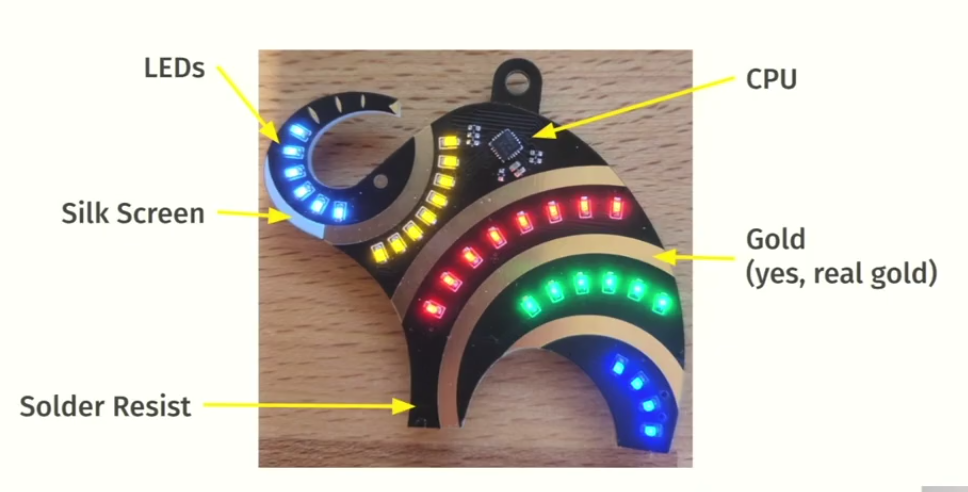
Before the heavier political sessions of the afternoon, Sunday morning also delivered one of the purest expressions of OggCamp's maker spirit. Chris Ellis's Lit Up Art — Further Down The Rabbit Hole was an absolute joy. Chris is a PostgreSQL consultant who looked at an Art Deco fused glass pendant, thought "I could make that out of a PCB," and then — displaying what he cheerfully describes as a lack of the voice that says "this is a silly idea" — spent the next however-long building LED art jewellery badges called Electric Elephants, designing them entirely in open source tools from Inkscape to KiCad to Arduino. That alone would be impressive. But Chris, apparently finding that insufficiently complicated, then built a custom opcode engine to run on the badges, wrote his own assembler, and created a web-based pattern designer so they can be programmed from nothing but a browser. They can also talk to each other. Top shelf STEAM work, delivered with the exact energy of someone who finds difficulty indistinguishable from fun. You can see them in action on YouTube.
Papers Please?
UK Digital ID Scheme — Problems Aren't Just About Surveillance by Ilias and James Baker was one of the most genuinely alarming talks I've attended in some time. The surveillance angle is obvious and well-rehearsed, but the deeper question this talk asked was more interesting and more frightening: who owns the frameworks that make such a system work? If a national digital ID infrastructure is built on proprietary or foreign-controlled technology, could a hostile power — or even just an unfriendly trade partner — effectively switch it off? The geopolitical dimension of digital sovereignty is something we don't talk about enough. I joined the Open Rights Group after further chats in the Pioneer room..

He who pays the piper....
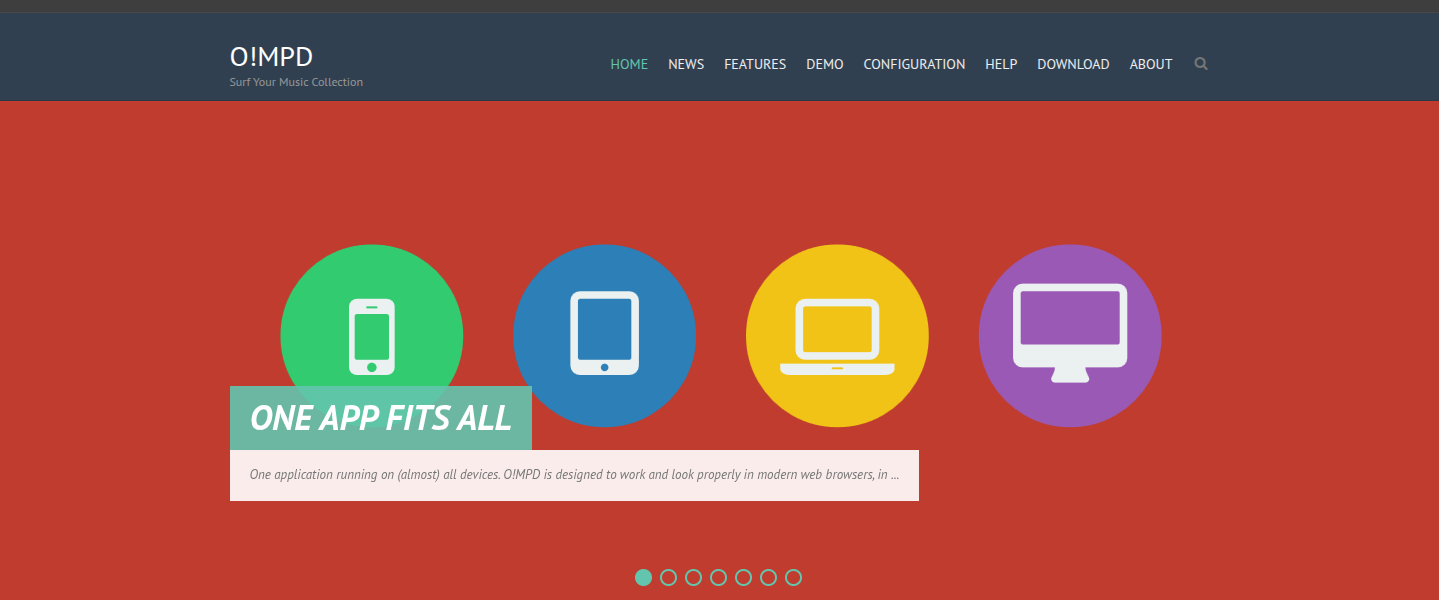
Tom Chiverton's Music and Freedom picked up the sovereignty thread and moved it into personal territory — what do we actually own when we think we own digital media? When you buy a film on Amazon Prime, do you own it? When a streaming service loses the rights to an album, where does that leave you? Tom highlighted nham.co.uk and O!MPD as part of the solution — self-hosted music, on your own hardware, under your own control. As a musician and music obsessive, this spoke directly to me. Another Raspberry Pi is going to be pressed into service as a home music server. The Pi is doing a lot of heavy lifting this weekend.
Let's LETS
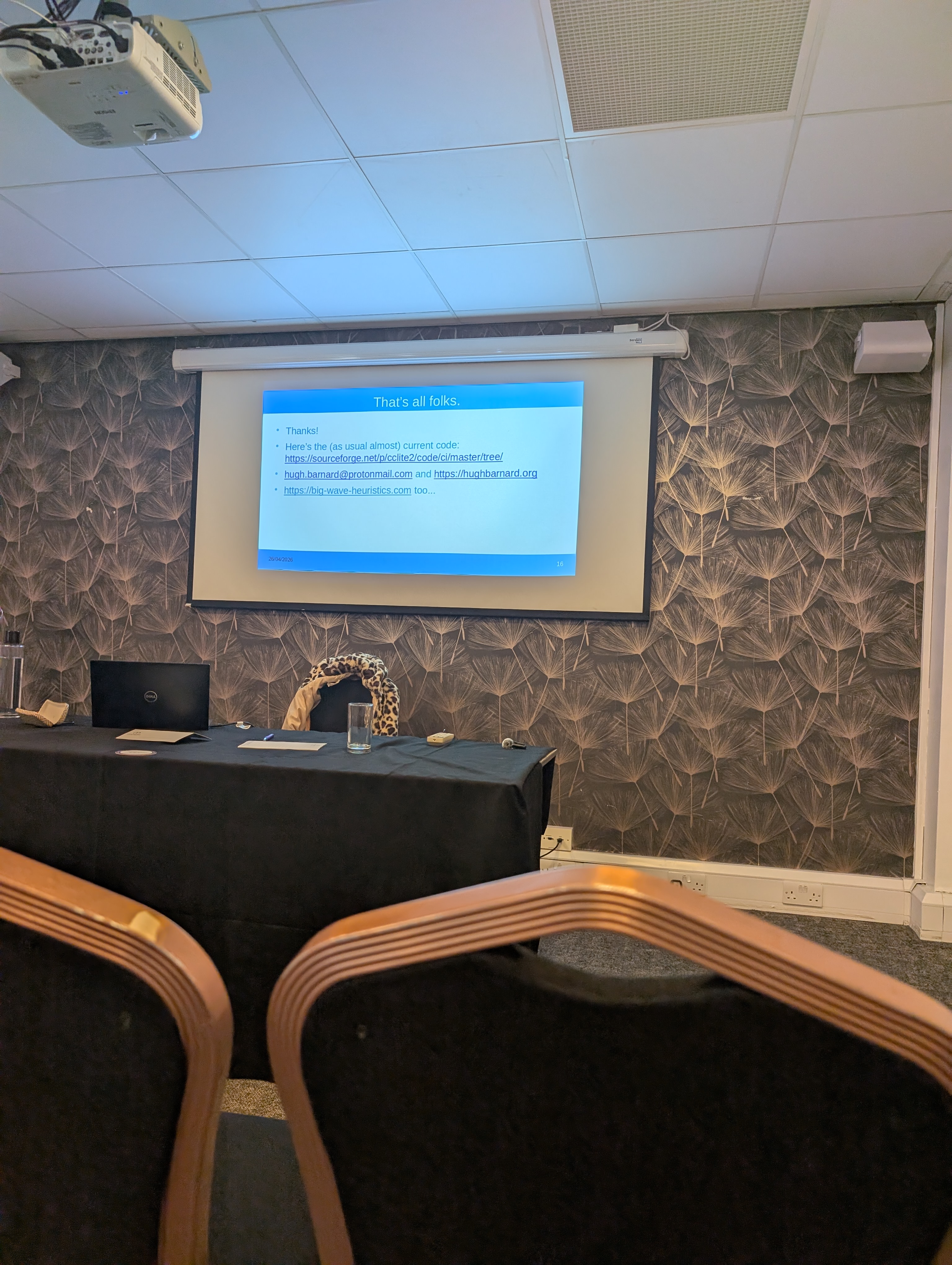
CCLite2 talk was a genuine highlight of the whole event. CCLite2 is open source software for running mutual credit and LETS (Local Exchange Trading Systems) — the kind of community economy infrastructure that's been quietly ticking away as an alternative to conventional money for decades. Hugh is a time-served, deeply experienced software engineer and an absolute crusader for this kind of commons-based economic tooling. The code is on SourceForge, he's reachable at hugh.barnard@protonmail.com and hughbarnard.org, and yes — it runs on a Raspberry Pi.
Repairing the Unrepairable
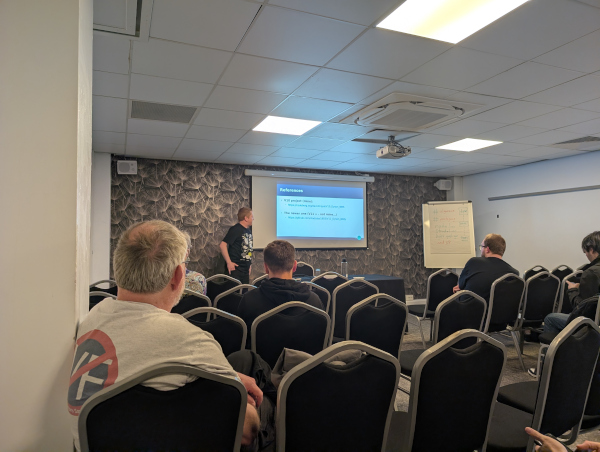
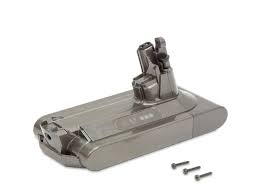
Repairing the Unrepairable was everything the title promised. The speaker had taken on a Dyson vacuum cleaner's lithium-ion battery pack — a device deliberately engineered to resist repair, with a Battery Management System that locks out replacement cells. With extraordinary persistence, they cracked it. The cells are straightforward to replace once you know what you're doing. The software took considerably longer. The final solution involved reprogramming the BMS via a Raspberry Pi's GPIO pins. The V10 project lives on Codeberg — naturally — and there's a community-built V11+ version on GitHub too. The right to repair isn't just a political slogan. It's a technical discipline, and it was demonstrated beautifully here.
Algorave
And then, to close the weekend, Martin Hamilton — wizard, AI critic, sage — took to the room for Algorave using nudel.cc. Live coding music, in real time, from algorithms, in front of and including the audience. Well done Pasta Gang! Chaotic, brilliant, and the perfect bookend to a weekend that started with him dissecting the misuse of generative AI and ended with him using computation as pure creative joy. Martin contains multitudes.
The Hallway Track
The meeting of like-minds.One of the things that makes OggCamp genuinely different from other events is that the scheduled programme is only half the story. During a gap in the Sunday afternoon, I found myself in conversation with a member of the Collabora team, talking about how their work on open document standards aligns with what we do through MidiDigi and the wider Rochdale digital inclusion ecosystem. A few other attendees and sponsor stall folk drifted over, and before long I was in full flow about the Citizens Curriculum — our Freirean approach to digital skills education, rooted in Paulo Freire's idea that education should be a practice of liberation rather than a transfer of information — alongside the Rochdale Community Mesh, the Digital Tech Library laptop repurposing programme, and the work at the Lighthouse Project in Middleton.
People were genuinely interested. Some were visibly surprised that this scale of community-rooted, open source-driven work was happening in Rochdale. It shouldn't be surprising — but it's a reminder that telling our story matters, and that OggCamp is exactly the right audience for it.
The Raspberry Pi Is Running Through This Weekend Like a Stick of Rock
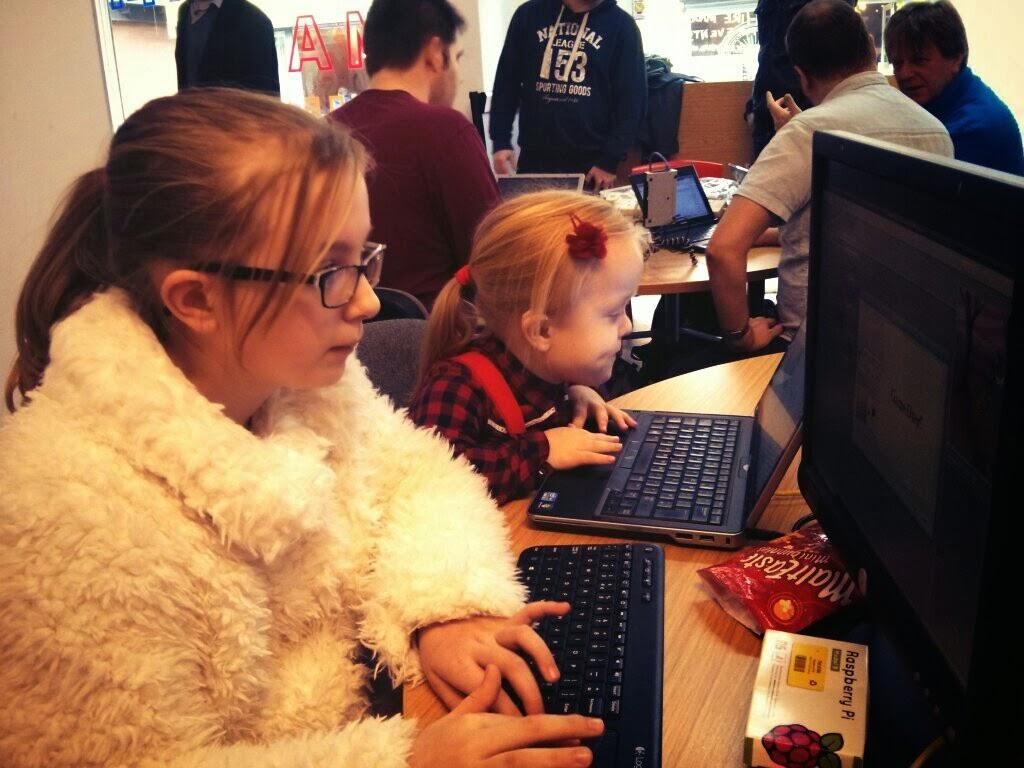
From my early days as a Raspberry Pi(oneer) with my daughter at the first MCR Raspberry Jams, I knew these cool devices would play a significant role in my future.
However, I didn't plan to count the Pis, but by Sunday afternoon it was impossible not to notice. Home automation. O!MPD music server. CCLite2 mutual credit system. Dyson battery BMS reprogramming. My own upcoming mesh network nodes. The Raspberry Pi Foundation's little computer has become the quiet infrastructure of the open source maker world — affordable, capable, and community-trusted in a way that no proprietary embedded platform could ever be.
It also reinforces something important: this isn't a community of people who only think about software. It's a community that builds things, fixes things, and refuses to throw things away.
Why I Need To Keep Coming Back..
OggCamp isn't the biggest event in the open source calendar. It doesn't have the biggest budgets, the flashiest production values, or the most famous keynote speakers. What it has is something harder to manufacture: a genuine community of people who care about the same things, who are willing to share what they know, and who extend the same welcome to a Rochdale digital inclusion worker as to a senior engineer at a major open source company.
I'll be honest — I find the intellectual loneliness of working across too many domains genuinely challenging at times. OggCamp is one of the few places where I don't feel that at all. Where I'm the student again, in the best possible way. Where I leave with more ideas than I arrived with, more connections, more things to build, and an entirely unreasonable number of future Raspberry Pi projects.
Liverpool. Sheffield. Manchester. See you at the next one.

You can retro-attend here: YouTube