
Gracie From Beyond the Grave: A STEAM Case Study in Community Learning
The Dialogue: History as Living Material
The group researched and discussed Gracie's life not as heritage tourism but as unfinished argument.
They talked about her wartime persecution — how her marriage to Monty Banks, an Italian, during the Second World War made her a target of public hostility at the very moment she was entertaining troops closer to the front line than almost any other performer. The British press, which had adored her, turned. She was called a traitor. She kept singing.
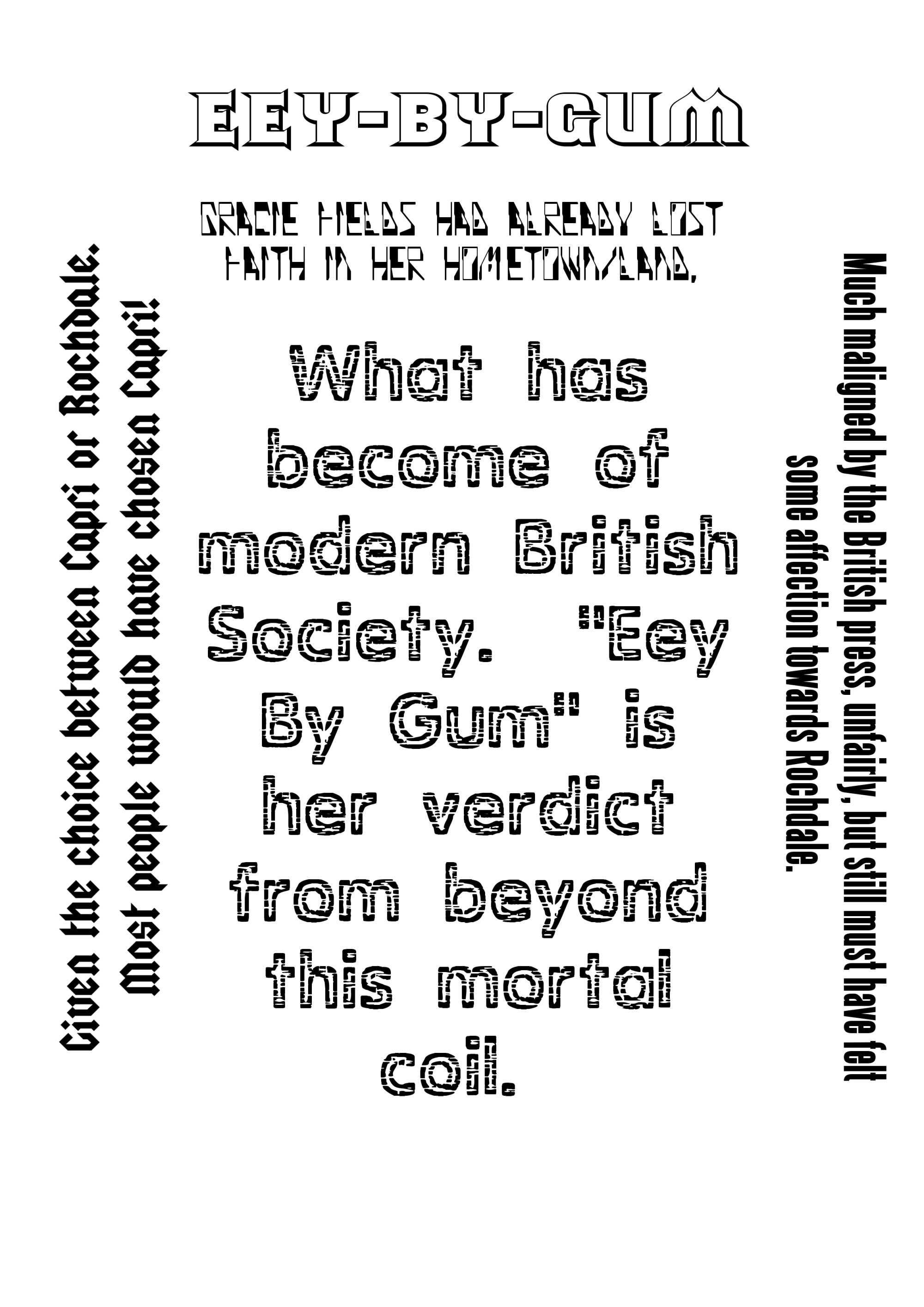
They talked about her eventual self-exile to Capri — and the uncomfortable question embedded in one of the project's finished pieces: Given the choice between Capri and Rochdale, most people would have chosen Capri. That's not a condemnation of Gracie. It's a mirror held up to what Rochdale had become, and what it was still becoming.
They talked about deindustrialisation, about the slow evaporation of the pub and the social club, about town centres drained of footfall and camaraderie by a combination of neoliberal economics and algorithmic retail. They asked what the woman who came from working-class community culture — who was working-class community culture, embodied and amplified — would make of a world in which those communities had been so deliberately hollowed out.
The verdict, delivered typographically in the EEy-By-Gum poster with characteristic northern understatement: Eey By Gum.
The Concepts: Iconoclasm, Warhol, Hauntology, and Fifteen Minutes
Alongside the historical research, the group explored some bigger ideas.
Iconoclasm — the destruction of images for political or religious ends, and by extension the challenge to any venerated institution or cherished belief — gave the project a conceptual spine. What does it mean to produce disposable art? What does celebrity actually preserve, and what does it distort? Is the mass reproduction of an image an act of celebration or erasure?
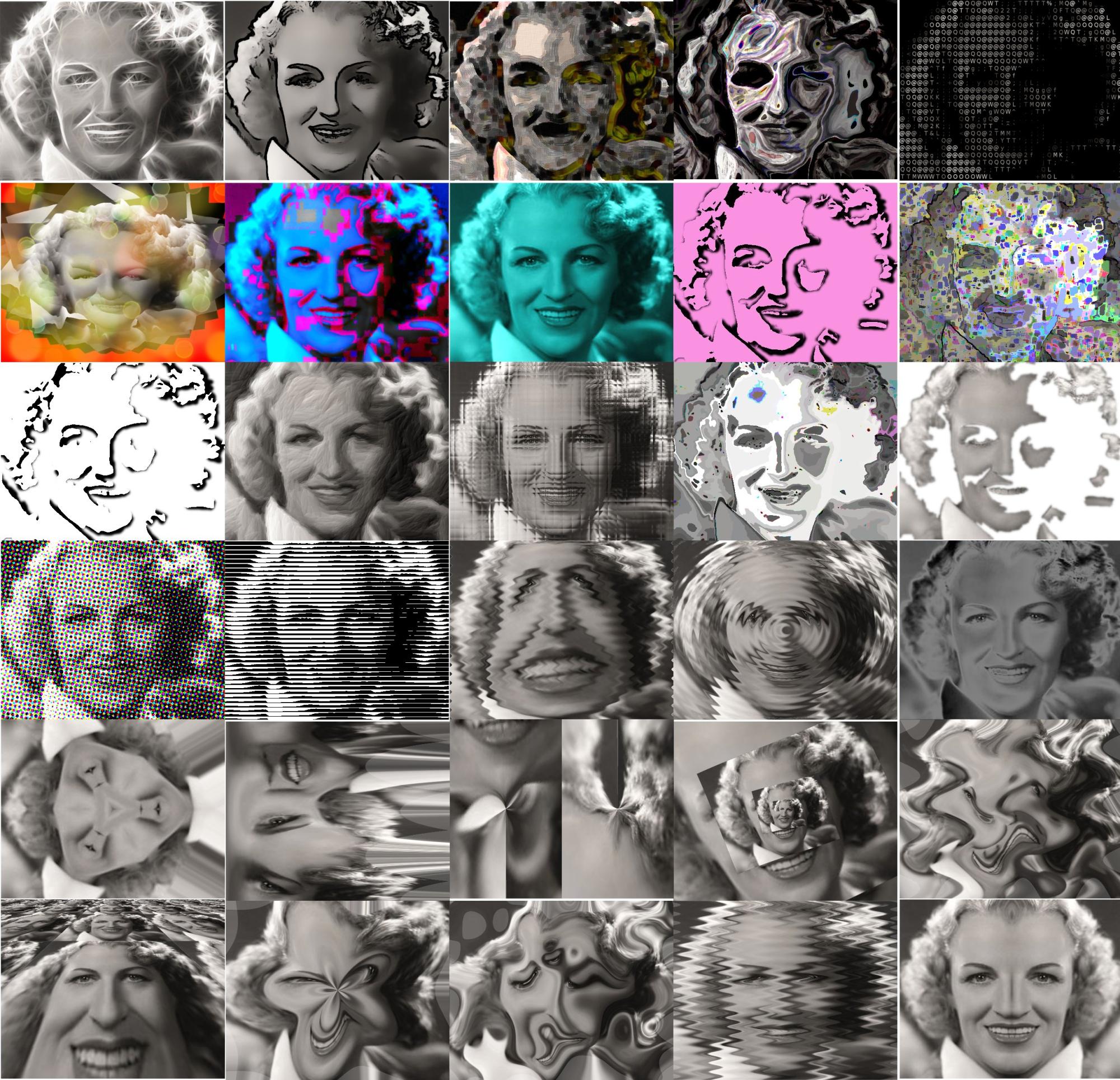
These questions found their answer in Wahollpaper — a grid of Gracie's image processed through dozens of digital filters and distortions, invoking Warhol's serialised celebrity portraits while questioning what they mean. Warhol's silk-screens of Marilyn Monroe weren't really about Marilyn Monroe. They were about what happens to a human being when culture turns them into an icon. Wahollpaper asks the same question of Gracie, and adds one more layer: what happens when the icon is also a woman who was punished for being human, who chose exile over acceptance, who the British press never quite forgave?
The group also explored hauntology — a concept rooted in Derrida's observation that presence is never quite present, that the past persists as a kind of spectre that refuses to stay buried. Mark Fisher developed this into a cultural diagnosis: that we are haunted not just by what was, but by what was promised and never delivered. The futures that got cancelled. The communities that were told their time had passed.
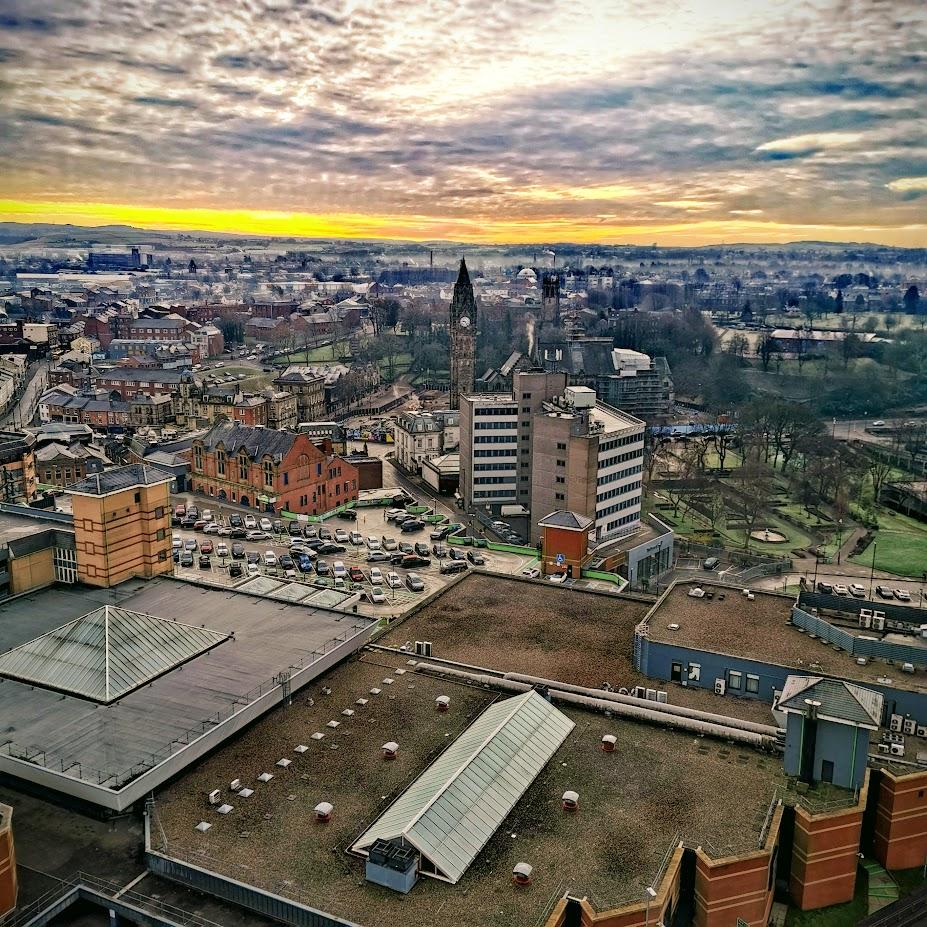
Rochdale knows this feeling intimately. The mills gone. The social clubs gone. The town centre hollowed out. What remains is the echo — and Gracie Fields, inescapably, is part of that echo.
The group watched and discussed The Shining as a hauntological text — a building so saturated in its own past that it consumes the present. The danger Fisher identified in nostalgia isn't sentimentality; it's the way a haunted present can become a trap, mistaking the ghost for the goal. The project tried to do something different: to summon Gracie not as comfort, but as witness. Not to restore what was lost, but to ask hard questions about who lost it, and why, and what we do next.
Fifteen minutes of fame looks different when the subject had sixty years of it and still ended up living on an island in the Mediterranean — and when the communities that produced her have been so thoroughly dismantled that there's nowhere left for the next Gracie Fields to come from.
The Making: Sound, Hardware, and Haunted Packaging
The project didn't stop at discussion and image-making. It made things.A physical recording was made of the Rochdale Town Hall clock mechanism and the bells of St Chad's — treated not as curiosities but as continuity. These sounds have marked time in Rochdale across Gracie's lifetime and beyond. They are the acoustic infrastructure of a community. The group decided they belonged in the piece.
Those sounds, Gracie's music, and the material produced through the project were woven together in the audio work Gracie From Beyond the Grave — a haunting from a woman who had complicated feelings about the place she was haunting.
And then the haunting was given a delivery mechanism: a fish and chip box, because of course it was. Powered by a Raspberry Pi, fitted with buttons, the box played Gracie's tunes on demand. Humble, functional, brilliant. Community technology in the most literal sense — the technology of Friday night, of shared tables, of something hot wrapped in paper.
Gracie From Beyond
A haunting of Rochdale by a change in frequency.STEAM in Practice
The project demonstrates what STEAM looks like when it grows from community rather than curriculum:
- Science & Technology: Raspberry Pi hardware, audio recording and processing, digital image manipulation
- Engineering: Physical build of the interactive fish and chip box; button interface design
- Art: Poster design with intentional typography (EEy-By-Gum, Wahollpaper); audio composition; iconographic commentary
- Mathematics: Rhythm and timing in the audio work; the logic of hardware triggering
But more than any individual STEAM strand, the project demonstrates the irreplaceable value of dialogue as method. The technology didn't drive the learning — the conversation did. The Raspberry Pi is the endpoint of a process that began with someone asking what Gracie might think, and everyone else having an opinion.
What This Is Really About
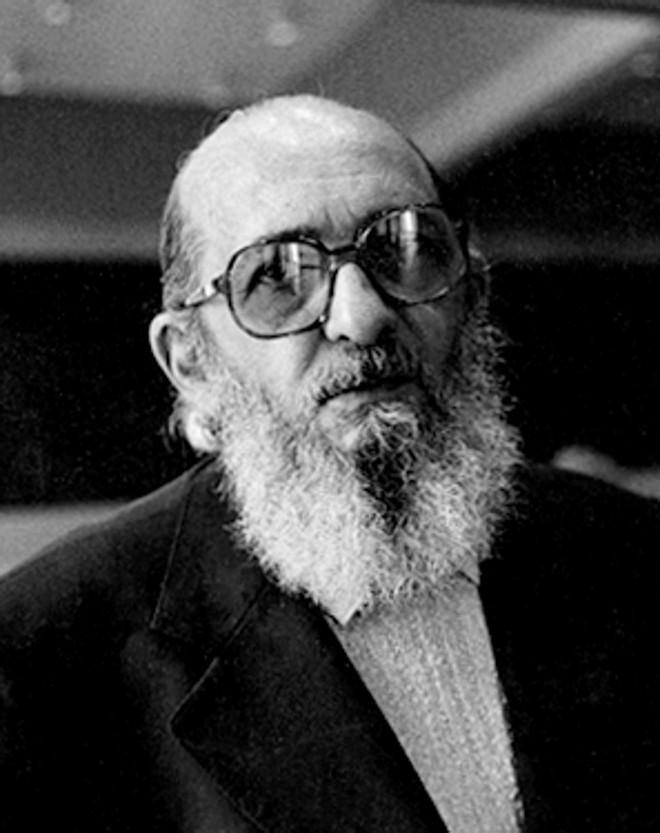
Paulo Freire argued that education is never neutral — that it either domesticates or liberates.This project liberated. It took a local icon, refused to treat her as a tourist attraction, and asked hard questions about class, community, betrayal, and the aesthetics of disposability. It made art from those questions. It made hardware from those questions.
And it sent Gracie's voice, from beyond the mortal coil, out of a fish and chip box in Rochdale.
Eey By Gum indeed.