Digital Sovereignty: Taking Back Control in a World Owned by Big Tech
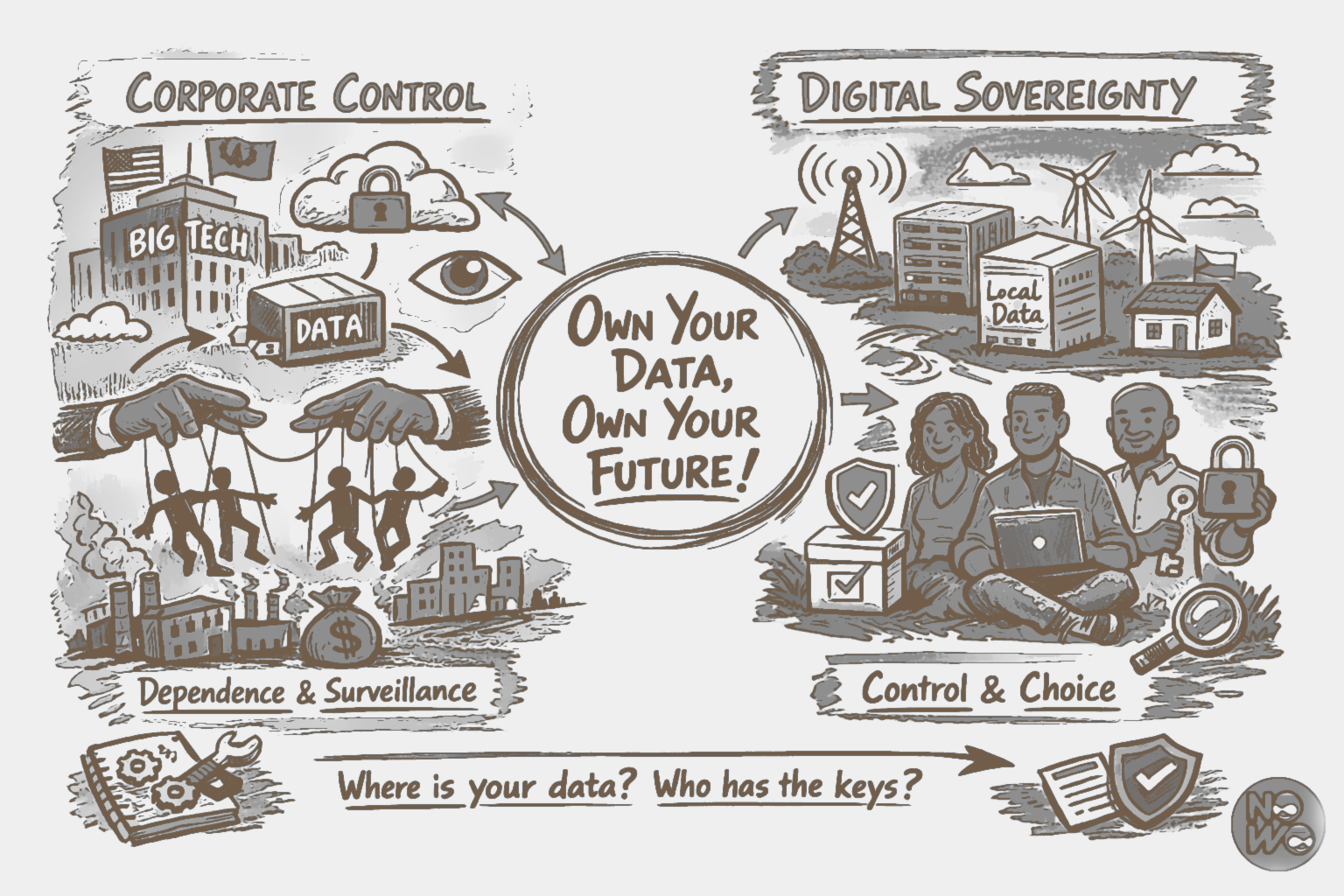
You don't own your digital life. Not really.
Your emails live on someone else's servers. Your contacts, calendar, documents, photos, health data, location history, political leanings, shopping habits — all of it sits in data centres you'll never visit, governed by terms of service nobody reads, monetised in ways you'll never fully know. The five tech giants — Google, Apple, Meta, Amazon, Microsoft (GAMAM, if you're keeping score) — have quietly become the infrastructure of modern life. And infrastructure, once embedded, is almost impossible to pull out.
But here's the thing: you don't have to accept it.
The open source movement has spent decades building the alternatives. Not half-baked, hobbyist alternatives — production-grade, enterprise-capable tools that governments, universities, hospitals, and businesses around the world depend on every single day. The problem isn't that the tools don't exist. The problem is that most people don't know they exist, or have been conditioned to believe that "free" only comes wrapped in surveillance.
Let's fix that.
What is Digital Sovereignty?
Digital sovereignty is the principle that individuals, communities, and institutions should have genuine control over their own data, their own infrastructure, and their own digital futures — rather than being permanently dependent on corporations whose interests are fundamentally at odds with their own.
It doesn't mean going off-grid. It doesn't mean compiling your kernel by candlelight. It means making conscious, informed choices about where your data lives, who can access it, and what it's used for — and choosing tools that respect your right to make those choices.
Your Phone: The Device That Knows Everything
The smartphone is probably the most intimate surveillance device ever invented. It knows where you sleep, who you talk to, what you search for at 2am, how fast your heart is beating. Both major mobile operating systems — Android (Google) and iOS (Apple) — ship with extensive telemetry baked in. You're not just using their platforms; you're contributing to their data empires.
GrapheneOS is the gold standard answer for Android users who want to take that back. It's a hardened, privacy-focused Android fork designed for Pixel hardware, with sandboxed Google Play support if you still need it — but without the constant call-home behaviour of stock Android. It's not a compromise. Security researchers and privacy professionals trust it.
LineageOS takes a different approach, extending the life of devices that manufacturers have abandoned — a win for both privacy and sustainability. Your four-year-old phone can run a current, maintained OS instead of sitting in a drawer or ending up in landfill.
Your Email and Communications
Email is foundational. If your email is compromised — or quietly read by a platform provider — so is everything else: your bank, your health, your identity.
Proton Mail offers end-to-end encrypted email from a Swiss-based provider with a proper legal framework around privacy. It's not a novelty product — Proton now offers a full suite including calendar, drive, and VPN. Journalists, activists, and ordinary people who've simply had enough use it daily.
For messaging, Signal remains the benchmark for encrypted communication. Matrix / Element goes further — a federated, open protocol that means no single company owns the network. You can run your own server if you want to. Many organisations already do.
Your Files and Productivity
The Google Workspace / Microsoft 365 duopoly has convinced an entire generation that productivity software must live in the cloud, on their terms. It doesn't.
Nextcloud is the headline act here. File sync, collaborative document editing, calendaring, contacts, video calls, project management — all self-hostable, all open source, all yours. We've deployed it. It works. Large enterprises and government bodies across Europe run their entire digital workspace on Nextcloud, precisely because they don't want their sensitive data routed through US cloud providers subject to CLOUD Act jurisdiction.
LibreOffice handles the desktop side. OnlyOffice integrates beautifully with Nextcloud for collaborative editing with better Microsoft compatibility if that's a constraint. The tools are there.
Open Science and Open Medicine
The pandemic exposed something uncomfortable: that publicly-funded research is routinely locked behind paywalls that even universities struggle to afford, that data which could save lives is siloed in proprietary systems, and that the infrastructure of scientific knowledge is far too dependent on commercial interests.
PubMed and Europe PMC provide open access to biomedical literature. The Open Access movement is reshaping academic publishing. arXiv has made pre-print science freely available for decades. The argument that open science produces inferior knowledge has been thoroughly demolished — the Linux kernel, the Human Genome Project, and COVID vaccine mRNA research all had open components that accelerated progress.
In healthcare, electronic patient record systems built on open standards rather than proprietary lock-in are increasingly being recognised as critical infrastructure — not a luxury. NHS trusts are paying billions to get out of proprietary systems that hold their own data hostage.
Open Government
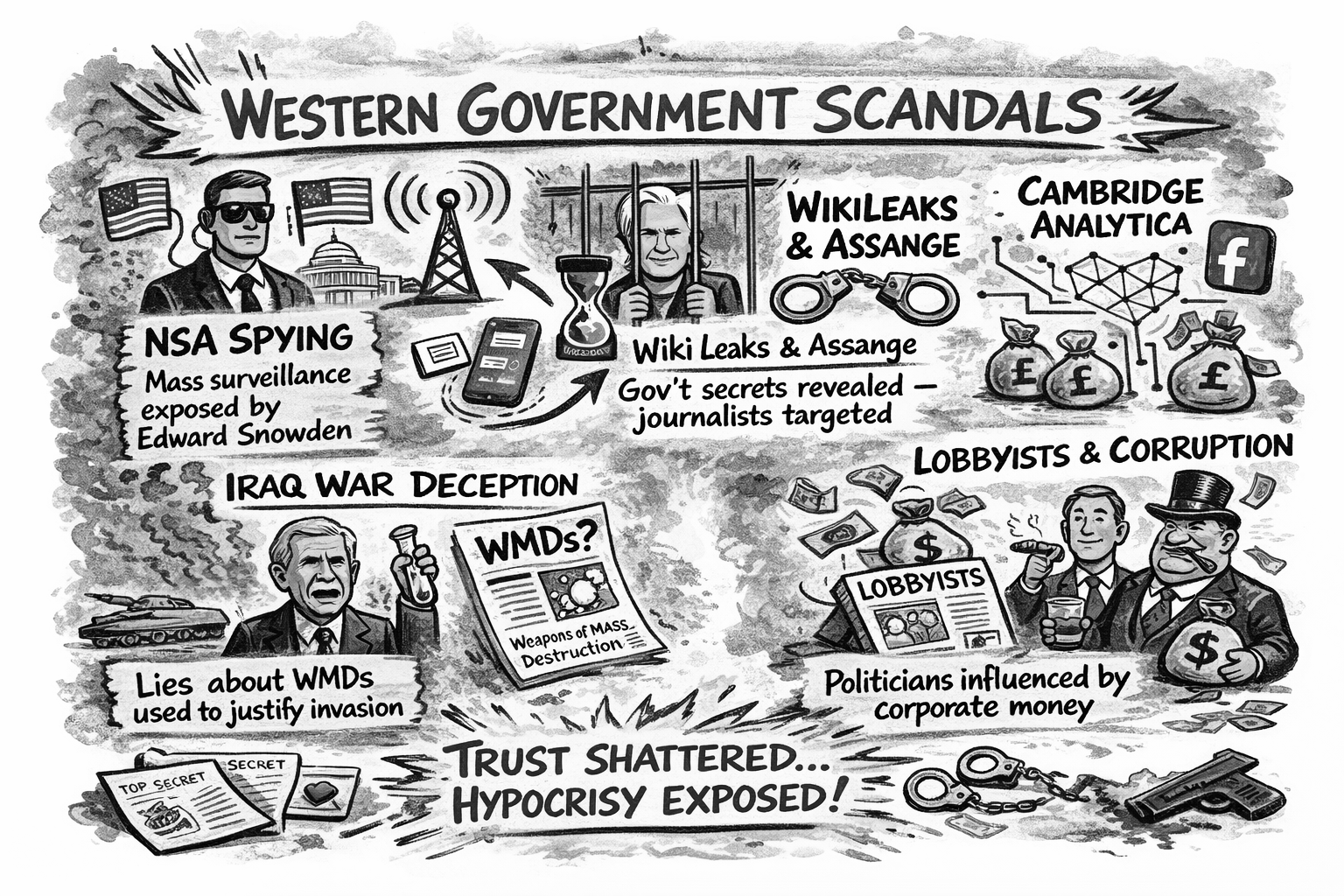
Government at its best is a public service. Which means the software it runs on arguably shouldn't be owned by a private corporation in another country.
The EU's Open Source Observatory tracks the substantial and growing adoption of open source across European public sector organisations. Estonia's digital government — widely regarded as the world's most advanced — is built substantially on open source foundations. Germany has made high-profile moves to migrate away from Microsoft to Linux across its public sector.
Closer to home, data.gov.uk and the broader open data mandate means that an enormous amount of publicly-generated data is — in principle — freely available for anyone to use, build on, or scrutinise. The catch is that exercising those rights requires tools and knowledge. Which is, not coincidentally, exactly what digital skills programmes exist to provide.
FOSS Finance: Your Money, Your Rules
Finance is perhaps the last frontier people expect to find open source, but it's genuinely fertile ground.GnuCash has been quietly helping individuals and small businesses manage double-entry bookkeeping for over two decades. Firefly III is a more modern, self-hosted personal finance manager — connect it to your bank via open banking APIs, run it on your own server, own every row of your own financial history.
For accounting in small organisations, Odoo Community and ERPNext provide full business management suites — accounting, inventory, CRM, project management — entirely open source. These aren't toys. They run real businesses.
At the infrastructure level, GNU Taler is building genuinely privacy-preserving digital payment systems — a rethink of how electronic cash could work if it were designed for citizens rather than card networks. The European Central Bank has open infrastructure components in its digital euro project. The ground is shifting.
The principle matters as much as the tools: your financial data is some of the most sensitive information about you. It should not be a product.
Open Hardware: All the Way Down
Software freedom is one thing. But what about the device that runs it?
Raspberry Pi needs little introduction — an affordable, documented, hackable single-board computer that has seeded a generation of makers, educators, and community projects worldwide. (Yes, we're Raspberry Pi Certified Educators. Yes, we are biased. No, we're not wrong.)
Arduino opened microcontroller programming to anyone with curiosity and a USB cable. RISC-V is a fully open instruction set architecture that's beginning to challenge ARM and x86 at the silicon level — a genuinely open alternative to proprietary chip architectures. OpenWRT gives you back control of your router, replacing the locked-down firmware your ISP shipped with something you can actually inspect, configure, and trust.
Open hardware matters because a device you can't understand is a device you can't really own. The maker movement — hackspaces, FabLabs, community workshops — is built on the principle that physical things should be as open to modification and understanding as software. It's the same argument. Applied to atoms instead of bits.
Open Food Data: You Are What You Scan

Before we get to the tools, a name worth knowing: Vandana Shiva. An Indian scholar, environmental activist, and food sovereignty advocate Wikipedia, Shiva has spent decades arguing that the corporate takeover of our food systems — through patents on seeds, monocultures, agrochemicals, and WTO trade agreements written by and for multinational corporations Navdanya international — is one of the defining struggles of our time. Seeds, she argues, are the first link in the food chain and the repository of life's future evolution Toward Freedom — not intellectual property to be owned, patented, and sold back to the farmers who cultivated them over millennia. Through Navdanya, the movement she founded, more than 150 community seed banks have been established across 22 Indian states, and two million farmers have converted to organic farming One Earth.
You might be wondering what this has to do with open source software. Everything. The argument is structurally identical: knowledge is a commons. Whether it's source code, scientific research, or centuries of agricultural wisdom, the enclosure of that knowledge by private interests diminishes everyone. Food sovereignty and digital sovereignty are the same fight, in different fields.
Which brings us to the tools.
This one surprises people. But food is data. And most people have no idea what's actually in the products they buy, what the supply chains look like, or what the environmental and ethical footprint of their shopping basket is.
Open Food Facts is a free, open, collaborative database of food products from around the world — built by volunteers, contributed to by producers, used by researchers, dietitians, and app developers. Scan a barcode. Get the ingredients, nutritional values, additives, allergens, Nutri-Score, and Eco-Score. No paywall. No subscription. No corporate interest in nudging you toward a premium product.
It's used in apps like Yuka and the Open Food Facts own mobile app, and its data feeds into academic research on nutrition and public health. The database has over three million products. It's genuinely impressive, and almost nobody outside the open data community knows it exists.

Open Data: The Bigger Picture
Food data is just one thread of something much larger. Open Data — the principle that certain data, particularly publicly generated or publicly funded data, should be freely available for anyone to use, share, and build upon — is one of the most powerful and underappreciated forces in modern technology.
OpenStreetMap is the obvious example: a free, editable map of the entire world built by volunteers and used by humanitarian organisations, governments, and thousands of applications. Apple Maps, Meta, and Amazon all use it. When disaster strikes, the Humanitarian OpenStreetMap Team mobilises to map affected areas in real time, enabling aid organisations to operate in places that commercial mapping ignores.
Wikipedia — the world's largest encyclopaedia — runs on MediaWiki, which is open source. The Wikimedia Foundation that stewards it is a non-profit. The content is created by volunteers under open licences.
CKAN is the open source data portal platform that powers data.gov.uk, the EU Open Data Portal, and dozens of national and local government data repositories. The infrastructure of government transparency is itself open source.
Our World in Data brings together global datasets on health, poverty, climate, education, and more — free to use, open to scrutiny, built for public understanding rather than private advantage.
The pattern is consistent: wherever you look, the most trusted, most durable, most genuinely useful data infrastructure tends to be open. Because openness invites scrutiny. And scrutiny is the best quality control that exists.
Where to Start
You don't need to do everything at once. Start with one thing:
Switch your email to Proton Mail.
It's free to start, the interface is good, and it works.
Try Nextcloud
there are hosted options if you don't want to self-host immediately.
Replace Google Maps with OpenStreetMap
or an app like OsmAnd or Organic Maps.
Scan your next supermarket shop with Open Food Facts.
The results may surprise you.
Look at GrapheneOS
if you use a Pixel and care about mobile privacy.
Switch your browser to Firefox.
Use uBlock Origin. These two things make an immediate, measurable difference.
Every step away from platform dependency is a step toward something better. You don't have to arrive all at once.

Go Down the Rabbit Hole. You Won't Regret It.
Here's the thing nobody warns you about when you start taking open source seriously: it's genuinely joyful.Not just in a worthy, hair-shirt, I'm-doing-the-right-thing way — though you will feel that too. It's joyful because open source is fundamentally about curiosity and craft. The source code is there. The documentation is there. The community is there, usually on IRC, Matrix, or the Fediverse, usually full of people who are unreasonably generous with their time and knowledge.
You start by switching your email. Then you start wondering about your router firmware. Then you end up running your own Nextcloud instance on a Raspberry Pi in the spare room, contributing bug reports upstream, and explaining to bemused family members why you'd rather run LineageOS than accept whatever Google has decided your phone should do today.
You build things that are actually yours. You understand them at a level that proprietary software will never let you reach. You find communities of people who care about the same things you do — not because they're monetising that care, but because they genuinely believe that how we build technology shapes how we live together.
And then you realise the rabbit hole has no bottom, and that's not a bug. That's the point.
OggCamp 2026 — Come and Find Your People
If any of this resonates, we'd strongly recommend making your way to OggCamp on 25th–26th April 2026 at the Manchester Conference Centre, Pendulum Hotel, Sackville Street, Manchester — right by Piccadilly station.OggCamp is an unconference celebrating Free Culture, Free and Open Source Software, hardware hacking, digital rights, and all manner of collaborative cultural activities. It's a place for hackers, community activists, coders and other members of our open society to gather — talks can be about anything, and often veer wildly in different directions: from politics to plumbing and everything in between.
You don't even have to have a ticket to come — though registering helps the organisers plan, and the suggested contribution is £40 (put in what you can afford). It's one of the most welcoming events on the UK tech calendar, and it's on our doorstep.
We'll be there. Come and find us.
Running an interesting open source stack? We'd love to hear about it — drop us a message or find us on Mastodon.