

Breaking Free: The Real Cost of Proprietary Software (And What to Do About It)
In our last post, we traced the parallel between the historic enclosure of the commons and the corporate capture of the digital world. We asked who controls the fences — and who benefits from them.
This time, we're getting practical. Because the fences are real, the tolls are real, and so are the alternatives.
What We've Actually Done
We've spent years helping organisations, community groups, and individuals answer that question in practice — not in theory.
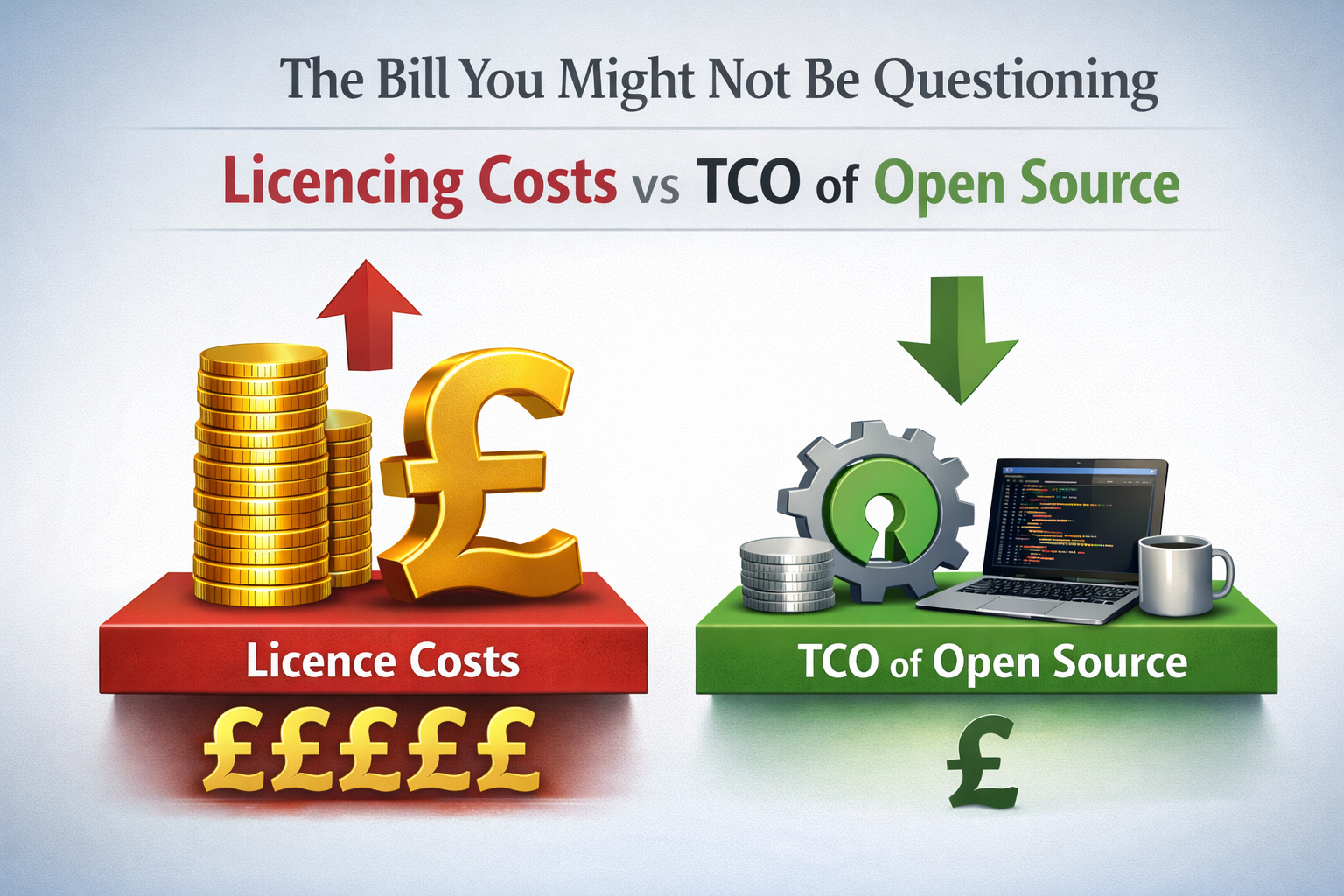
We've migrated clients from Adobe Creative Suite to GIMP, Inkscape, Kdenlive and LibreOffice — a full creative and productivity stack available at no licence cost. We've replaced SharePoint and OneDrive with NextCloud, giving organisations complete control over their own data, hosted on their own infrastructure, with no per-user fees and no vendor reading their files.
We've set up media servers, Raspberry Pi-powered digital signage, and Arduino-based people counters — projects delivered at a fraction of what proprietary equivalents would cost. In every case, the open source solution did the job. In most cases, it did it better.
For hardware, we've repurposed hundreds of laptops that would otherwise have been binned — loading them with PopOS or Ubuntu Studio rather than paying Microsoft's Windows 11 licence fee. Machines that organisations had written off became productive workstations again, extending their useful life by years and keeping them out of landfill.



The Rochdale Digital Tech Library
One project we're particularly proud of is our work with Rochdale Council's Digital Tech Library. Hundreds of laptops — renewed, repurposed, and loaded with a full suite of open source software — have been made available to residents on the wrong side of the digital divide. No Windows licence fees. No Adobe subscriptions. No barrier to entry.
That's the open source promise made concrete: technology that works, owned by no one, available to everyone.
We've done the same informally too — loading up close to a hundred laptops for individuals who couldn't otherwise afford a working computer, at no cost. The software is free. The time is the investment. And the impact is real.
Finding Your Alternatives
The most common objection we hear is: "but we need [specific proprietary tool]." In our experience, that's almost never actually true — it's usually habit, familiarity, or a procurement decision made a decade ago.
There are excellent resources for finding open source alternatives to almost any proprietary software:
AlternativeTo
AlternativeTo — community-driven, filterable by open source, covers virtually every category of software
OpenSource Alternative
OpenSource Alternative To — focused specifically on open source replacements for popular SaaS tools
Awesome Lists
Awesome Lists on GitHub — curated collections of open source tools organised by category, maintained by the community
The answer is almost always out there. The question is whether you're willing to look.
Vendor Lock-In: The Fence You Don't See Until You Try to Leave
The hidden cost of proprietary software isn't the licence fee — it's the lock-in. When your documents live in a proprietary format, your data in a vendor's cloud, and your workflows built around a single supplier's tools, switching becomes genuinely painful. That pain is not accidental. It is, in many cases, the business model.
Open source breaks that dependency. Your data stays in open formats. Your infrastructure runs on software you can inspect, modify, and move. You are not a tenant. You own the land.

We're currently working on implementing terminal services at the Lighthouse Project in Middleton — serving full Linux desktops to users on-site, centrally managed, with no per-device software costs. It's a model that scales: one well-specified server, dozens of lightweight endpoints, and a full productive computing environment at a fraction of the cost of conventional desktop deployment.
It's also, we'd argue, exactly what publicly funded organisations should be doing with public money. But that's a conversation for another post.
If you're paying shed loads for software licences and wondering whether there's a better way, we'd love to talk. Get in touch and let's see what's possible.